Community
osapeers.org
Interview Highlight
Andreas Rasche
Professor of Business in Society, Copenhagen Business School
In this exclusive interview, Andreas Rasche breaks down what the Omnibus outcome really means in practice. He shares his expert perspective on how the regulatory changes will affect sustainability reporting and how companies should respond to a less stable policy environment — but, just as importantly, what remains essential despite the shifting landscape.
The public debate around the Omnibus initiative has been intense. But companies need to decide now on how they continue and which steps to take.
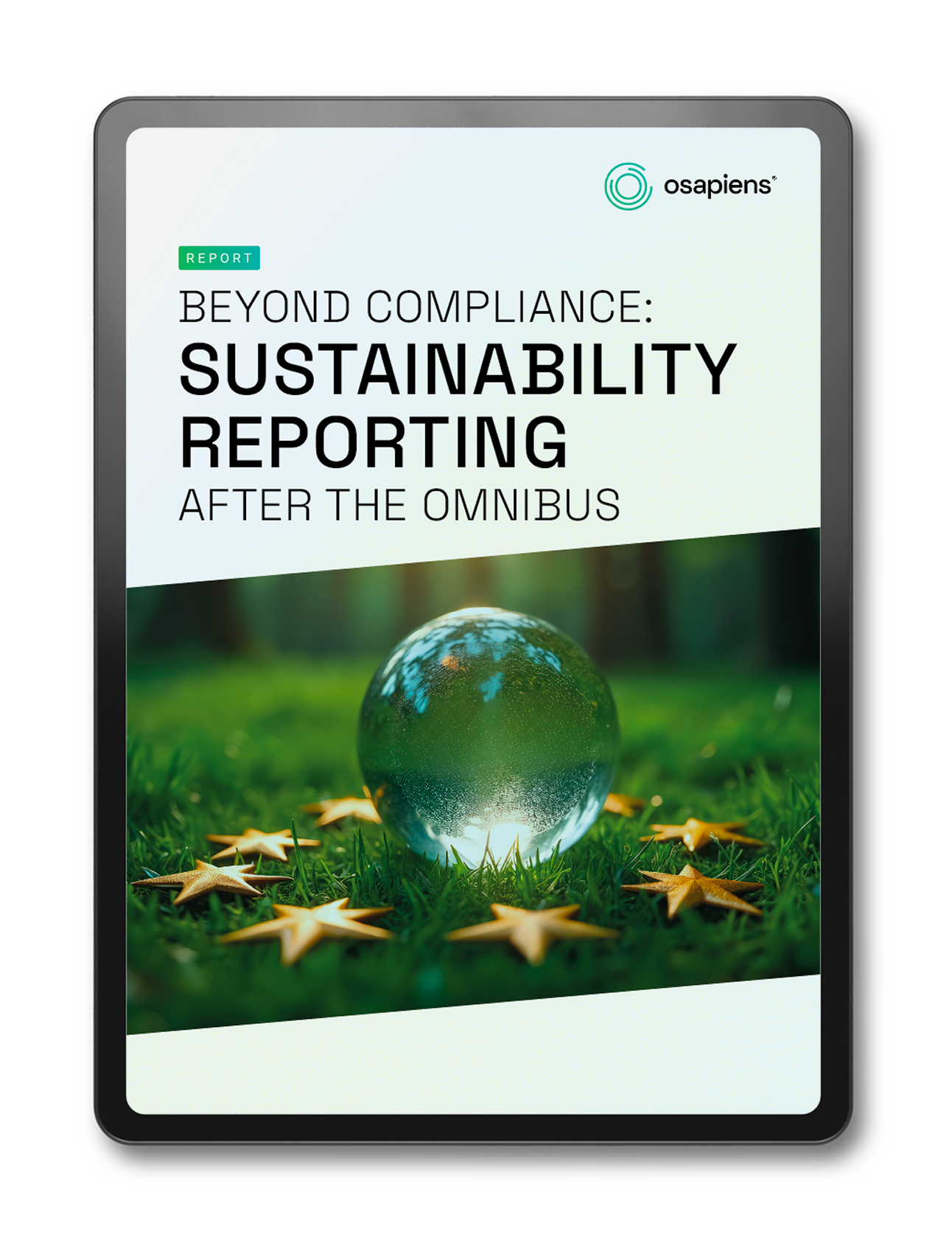
In cooperation with Andreas Rasche, the leading voice in corporate sustainability, we conducted a new study on Sustainability Reporting after the Omnibus, surveying 400 companies across Europe. The study sets the empirical foundation for understanding how sustainability reporting is evolving in a broader strategic and regulatory context.

Beyond Compliance


Finance Integration


Risk Visibility

What the data shows: Key findings from our latest study, Beyond Compliance: Sustainability Reporting after the Omnibus, with insights from 400 European companies
What stays relevant: Why sustainability reporting continues to matter despite regulatory change - for investors, partners, and corporate strategy
What to do next: How companies are choosing their reporting framework strategically, and what this means for resilience, risk management, and long-term positioning