Community
osapeers.org
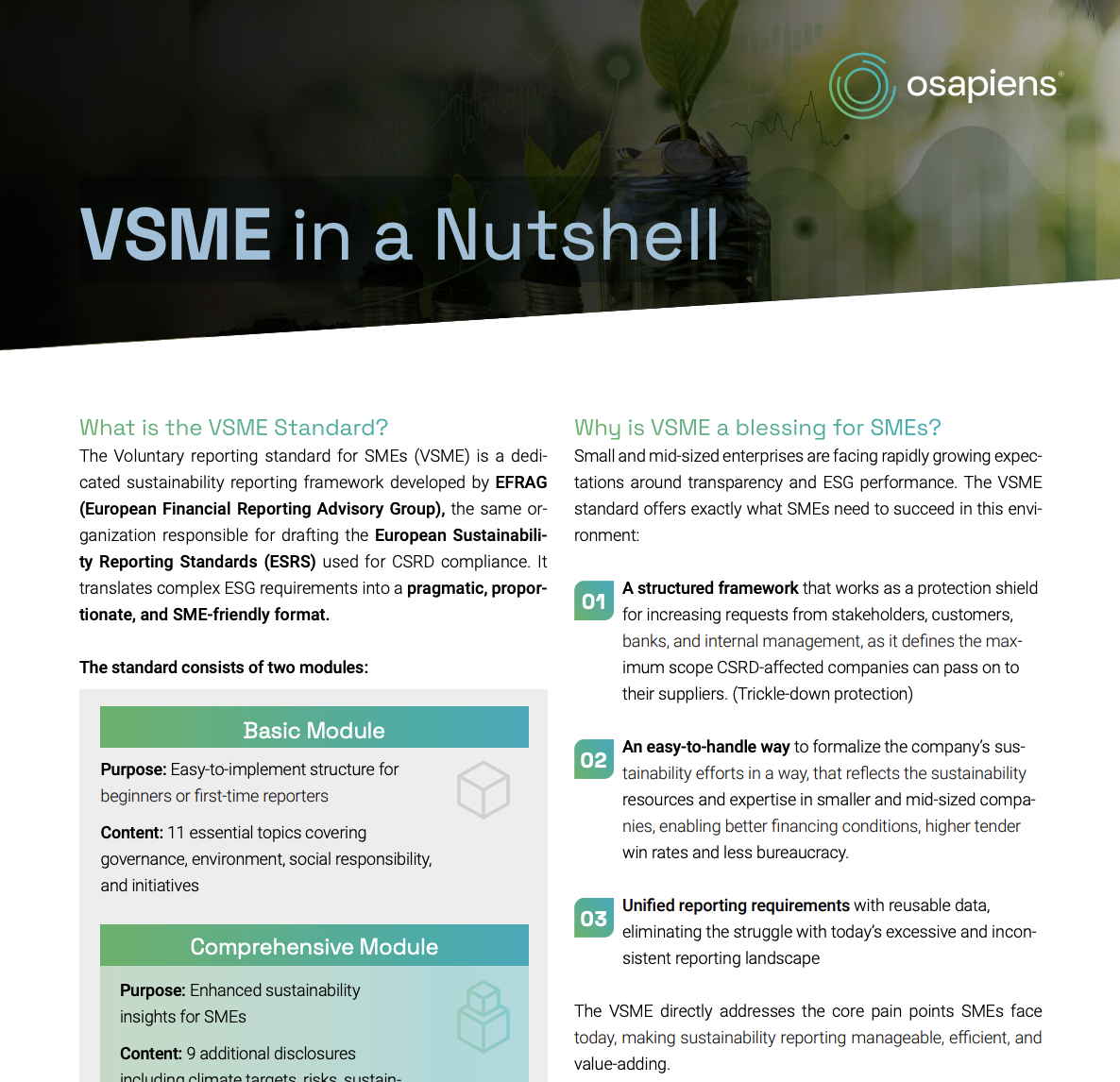
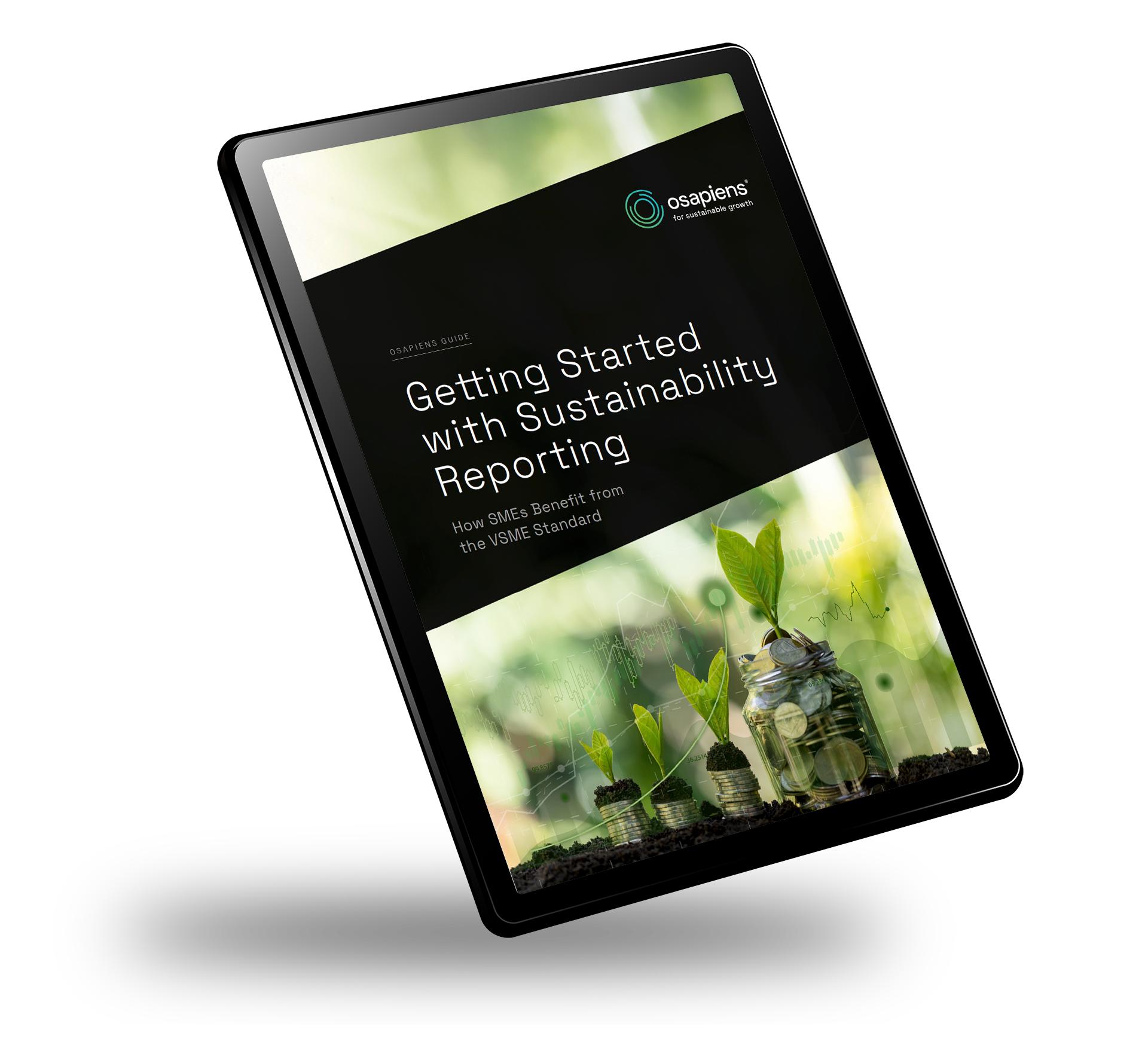
Small and medium-sized businesses face increasing pressure to deliver sustainability data on demand, facing fragmented requests from customers, banks, and investors under tight deadlines. This creates a heavy burden for lean teams. VSME, developed by EFRAG, provides a voluntary EU-wide standard that structures sustainability information into a single, reusable framework—without the complexity of full CSRD reporting.


Christophe Lévêque
ESG Expert



























































VSME gives SMEs a practical way to build sustainability reporting that’s structured, comparable, and manageable with lean resources.
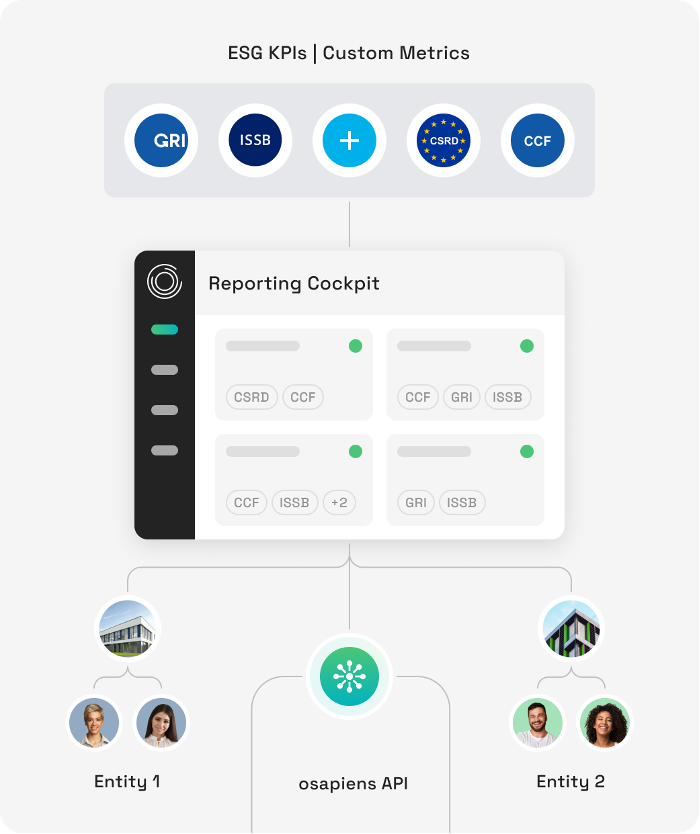
Made for SMEs, built to scale: A voluntary, EU-wide framework designed for resource-efficient reporting, while staying compatible with CSRD and ESRS.
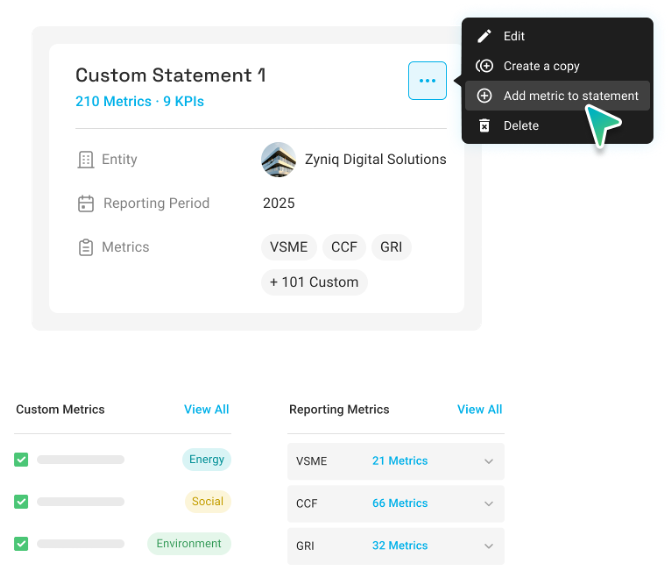
Modular by design: Use the basic module for a solid baseline report with minimal effort; add the comprehensive module for companies with mature sustainability strategies or ambition.
Clear structure across 20 sustainability topics: Covers the essentials across environmental, social, and governance areas, from energy and emissions to working conditions, diversity, human rights, and governance integrity.
Business-ready credibility: Strengthens transparency with customers, partners, and financial institutions, and helps SMEs prepare early for future requirements.

Sustainability is becoming a decisive factor in tenders and supplier evaluations across industries.

ESG criteria are increasingly mandatory in lending decisions, directly impacting credit access and financing conditions.

Business partners request ESG data in fragmented, individual formats, creating significant administrative and bureaucratic effort for companies.

SMEs often lack dedicated resources and long-standing ESG expertise, making structured reporting difficult to establish.

Relevant sustainability data is scattered across fragmented systems and data sources, complicating official reporting and data reliability.

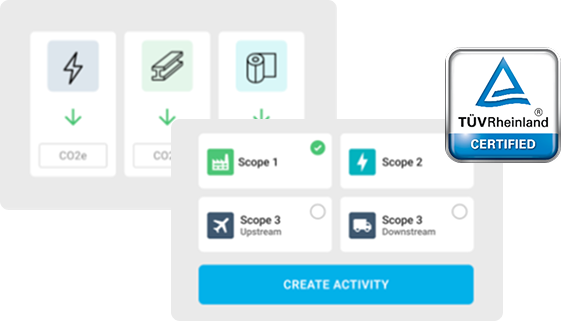
Access to trustworthy emission factor databases and transparency is often missing when determining Scope 1, Scope 2 & Scope 3 GHG Emissions
VSME gives SMEs a practical way to build sustainability reporting that’s structured, comparable, and manageable with lean resources.
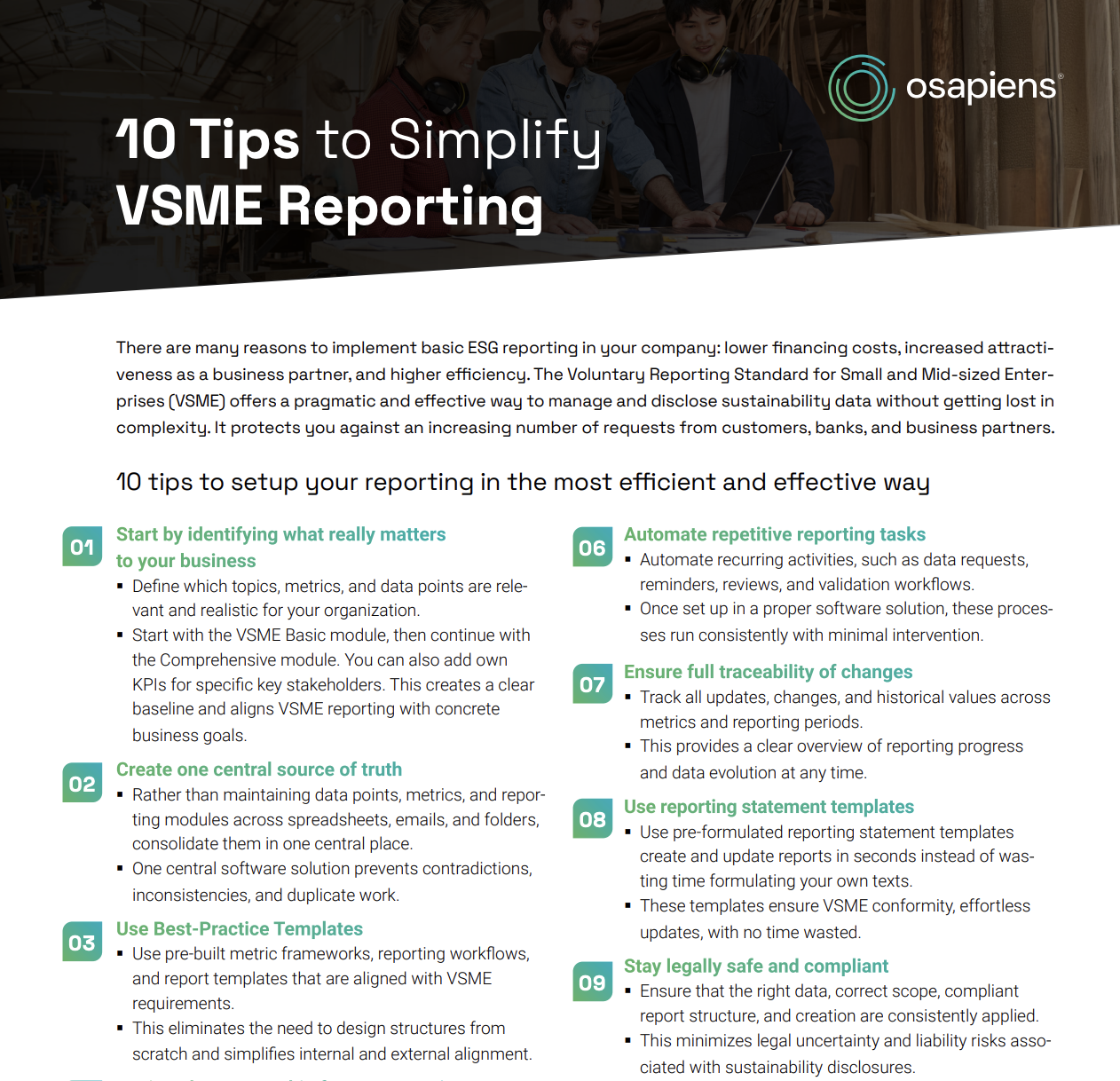
1. Identify relevant VSME requirements: Determine which VSME requirements apply to your business. Then assess what sustainability data is readily available to create immediate transparency and reveal data gaps.
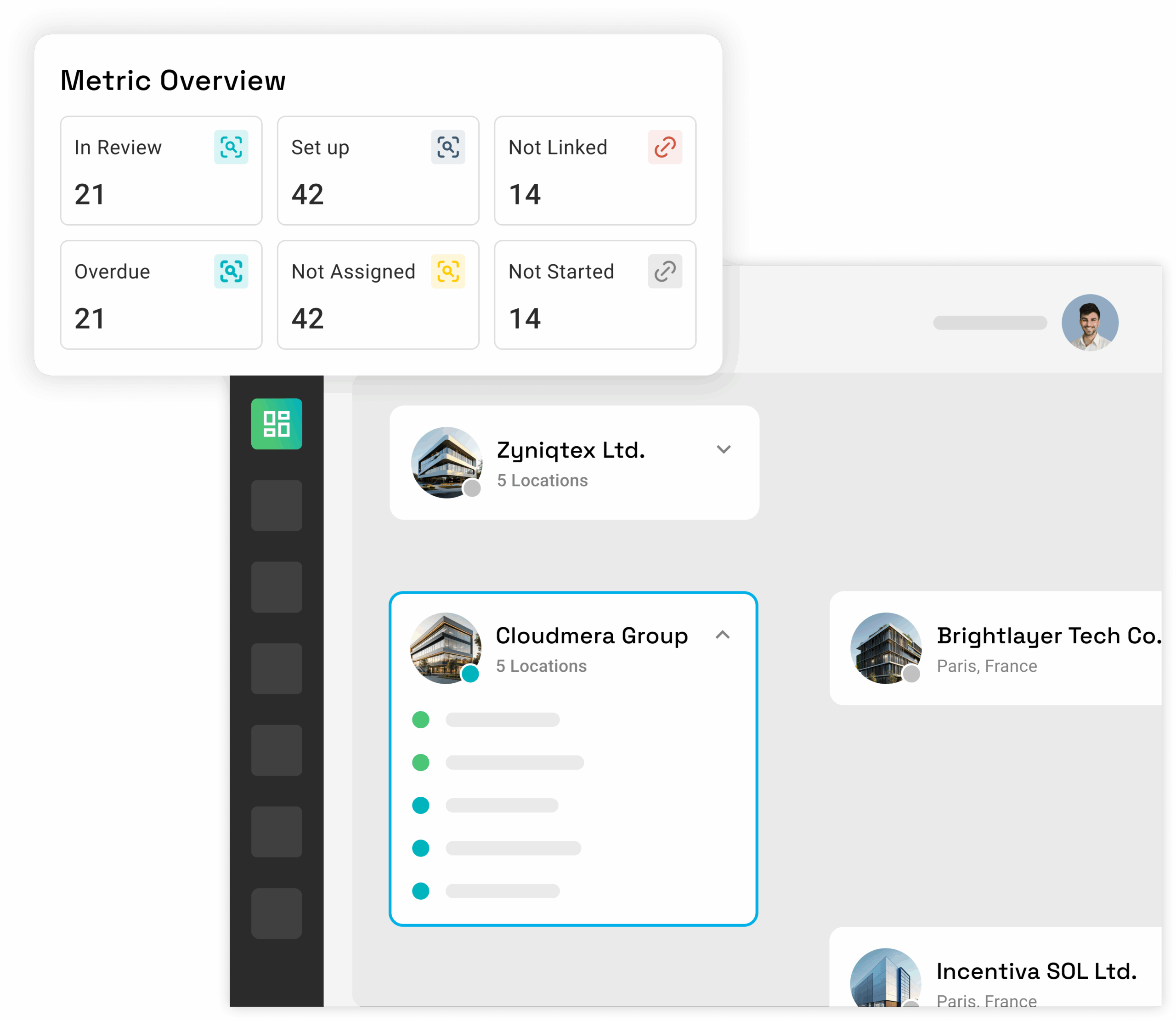
2. Define responsibilities and reporting structures: Clear roles, responsibilities, and reporting processes ensure sustainability data is collected consistently and audit ready. Reduce manual effort, avoid duplication, and establish a reliable foundation for VSME reporting.
3. Collect sustainability data: Capture core VSME sustainability metrics in a structured way - including energy and resource consumption, emissions, social indicators, and governance data.
4. Analyze data and prepare the VSME report: Analyze, prioritize, and compile sustainability data into an initial VSME sustainability report. This report establishes a clear baseline and enables companies to track progress and refine sustainability actions.
Resource center