New: The PPWR Compliance Guide


The all-in-one solution for smart PPWR Compliance
Automate PPWR data management across your value chain with the osapiens HUB for Product Compliance. Standardize supplier requests, centralize packaging data, and meet PPWR requirements with confidence.

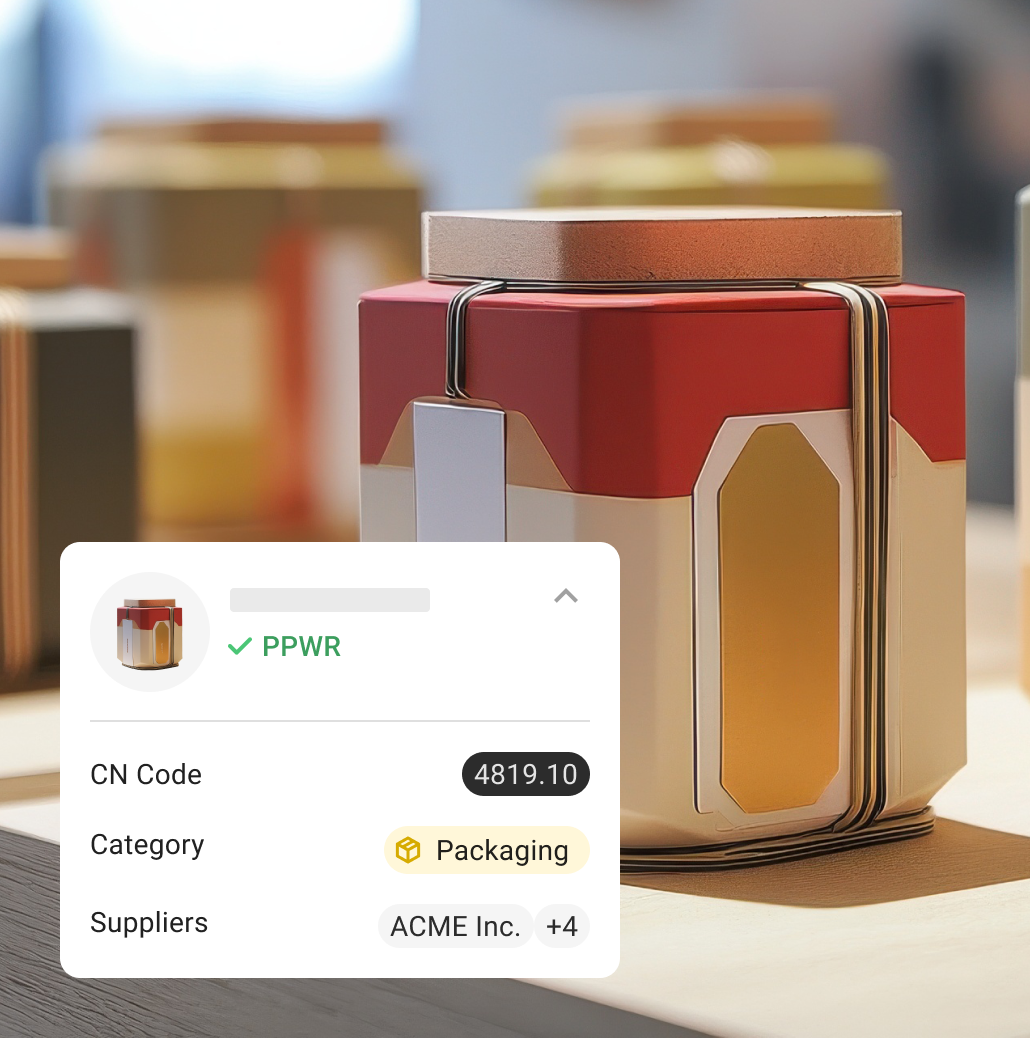

Key PPWR challenges
From 12 August 2026, companies placing packaging on the EU market must comply with the Packaging and Packaging Waste Regulation (PPWR). This brings three key challenges:
- Scattered data: Collecting accurate packaging information from all suppliers is time-consuming and error-prone.
- Manual workflows: One-off requests, follow-ups, and spreadsheets slow down operations and increase risk.
- Limited visibility: Consolidating packaging data and technical documentation for audit readiness is complex and resource-heavy.
The osapiens HUB for Product Compliance automates data requests, centralizes packaging information, and provides full transparency, giving you reliable, audit-ready data for PPWR compliance and future regulatory requirements
PPWR compliance made easy with the osapiens HUB
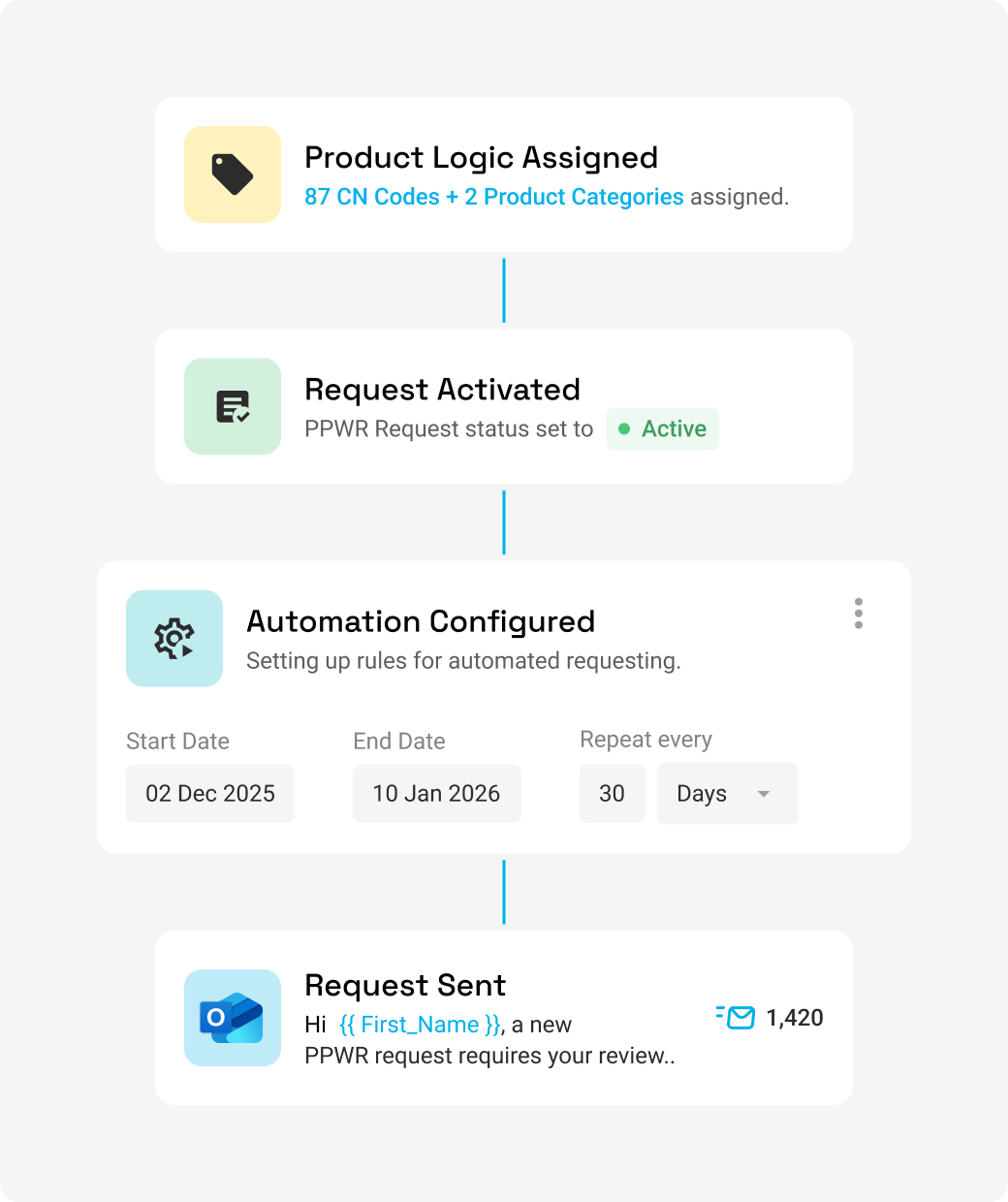
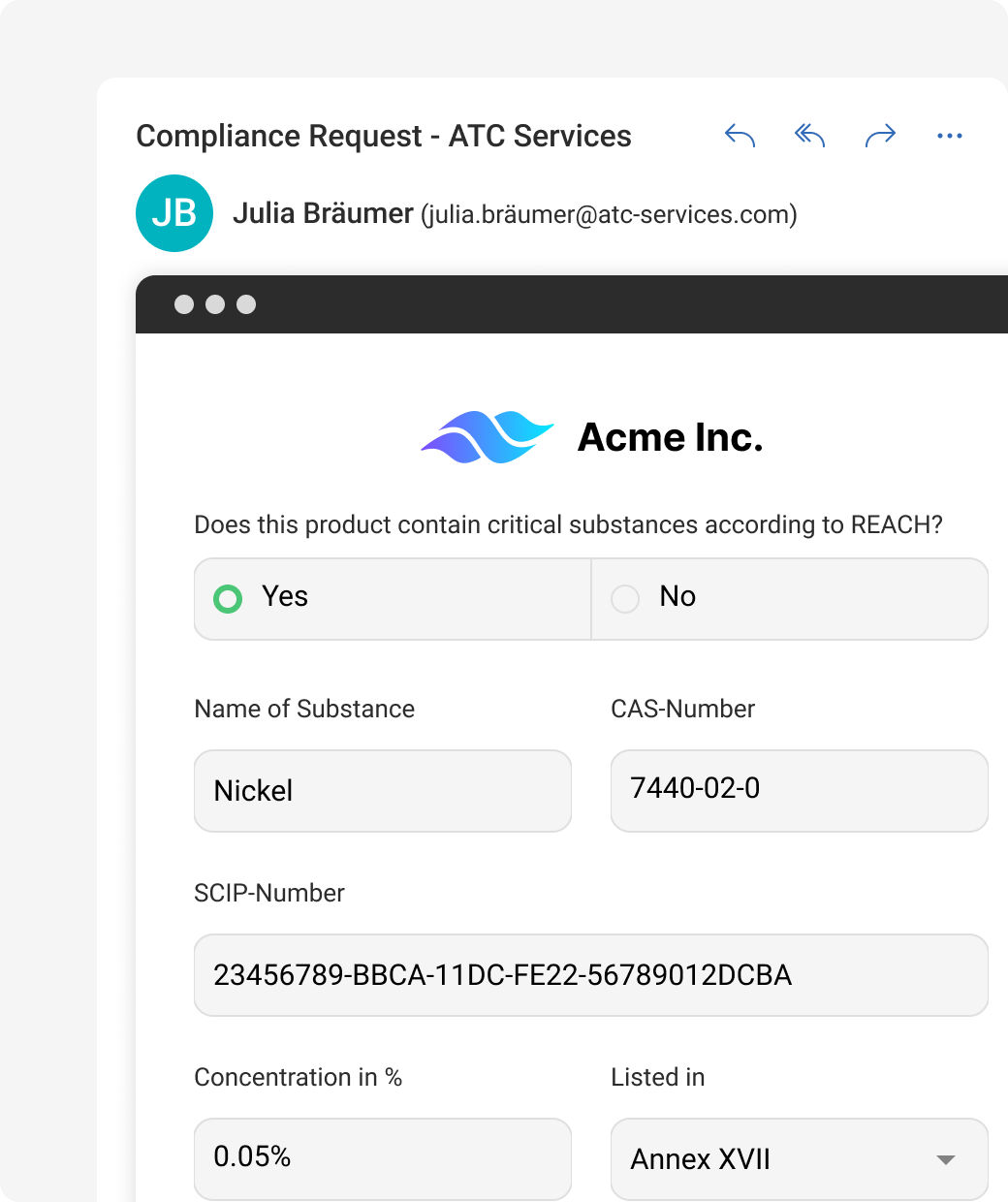
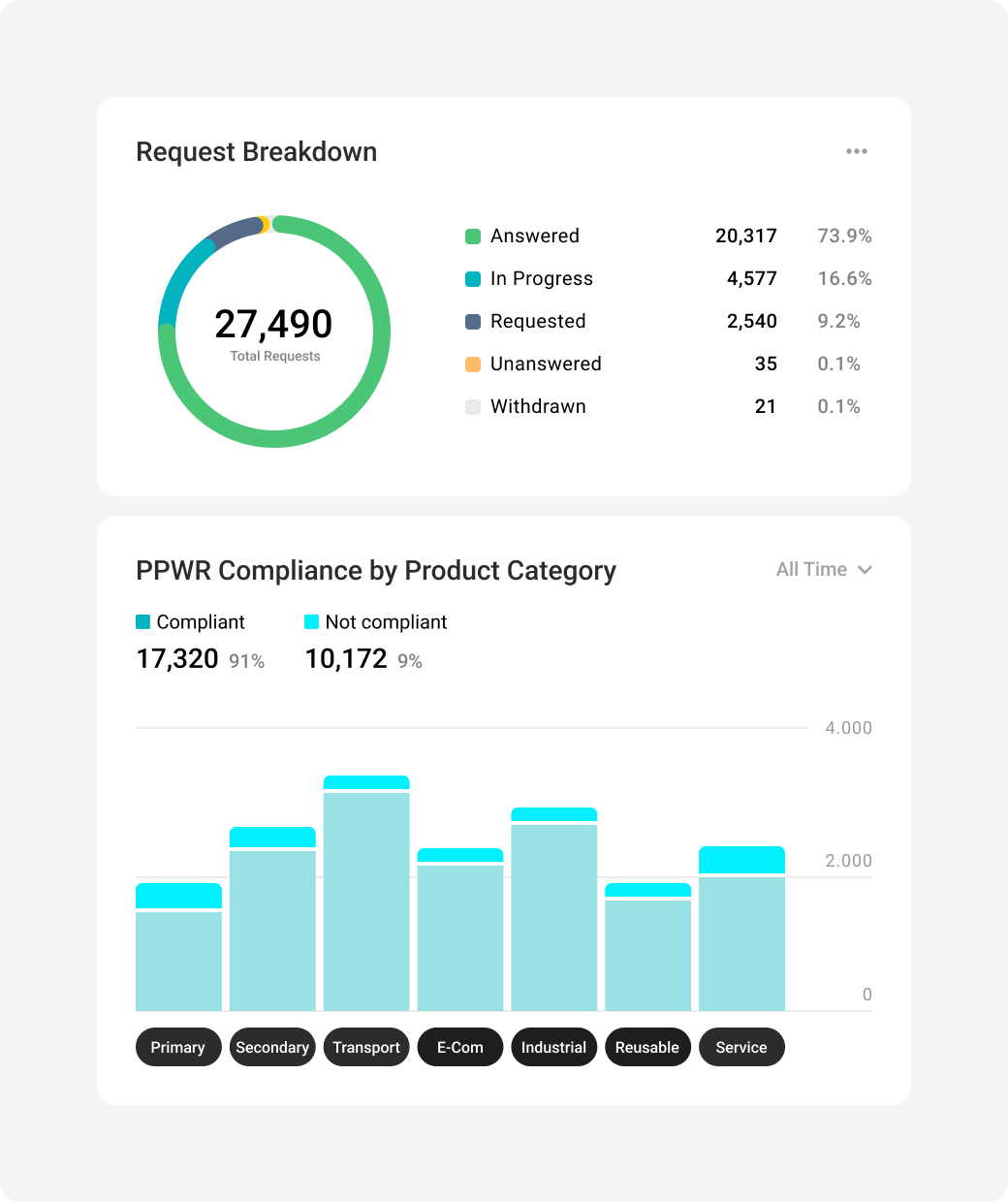
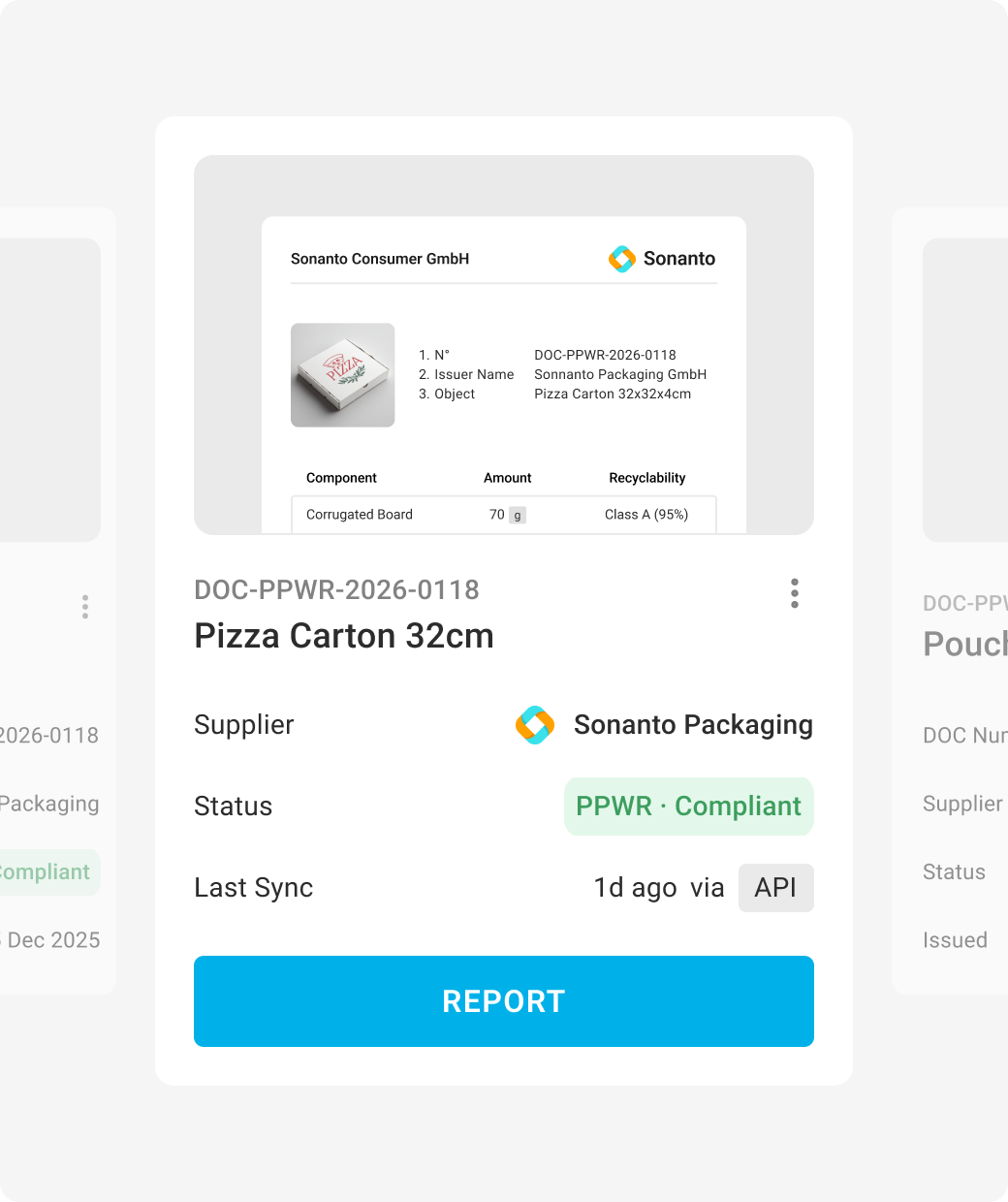
Simplify your PPWR compliance processes with the osapiens HUB for Product Compliance. Collect packaging data across your value chain, automate supplier data requests, and centralize all compliance-relevant information in one platform. By integrating product master data, standardizing supplier communication, and providing real-time visibility into compliance status, the osapiens HUB for Product Compliance helps ensure accurate packaging data, reduce manual effort, and keep your organization prepared for PPWR reporting and audits.
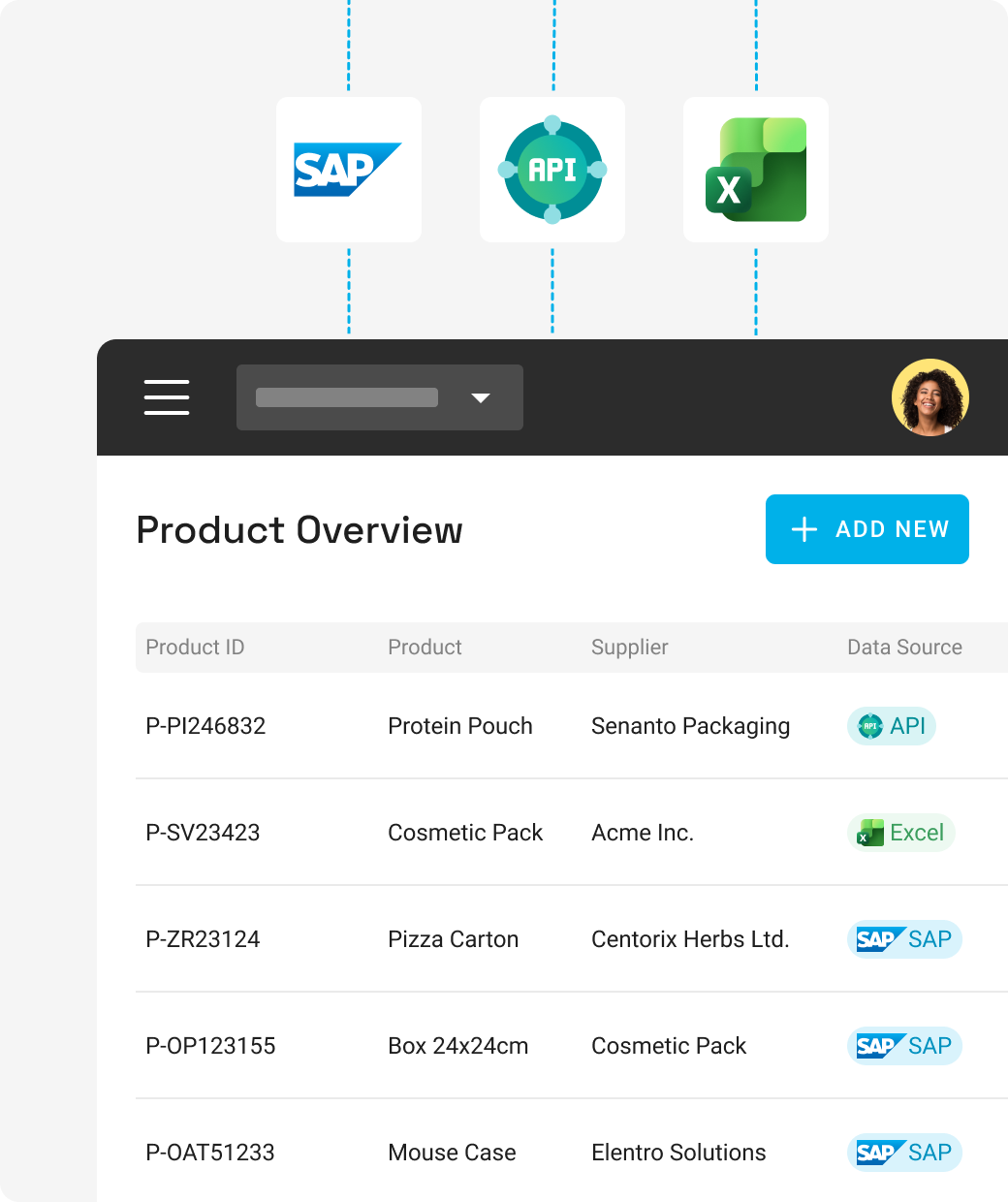
Integrate your product master data via ERP connectors, REST API, or Excel templates and share data across the osapiens HUB from day one.
Request a demo
Prepare for PPWR with Expert Insights
Manage PPWR data efficiently with the osapiens HUB, and learn how the regulation affects your business with our expert resources. Stay ahead of deadlines, streamline compliance, and gain practical guidance for every step of the process.

PPWR in Practice: How to Comply with the EU Packaging Regulations in 2026
Preparing for PPWR compliance requires not only the right tools, but also a clear understanding of the regulatory roadmap. In this webinar series, osapiens experts break down the key PPWR requirements and share practical guidance on how companies can prepare their packaging data, processes, and reporting before the 2026 deadline.
In this webinar series, you will learn:
- The key PPWR obligations for companies placing packaging on the EU market
- Practical steps to prepare packaging data and compliance processes
- A clear roadmap leading up to the August 2026 deadline
Register for the Webinar
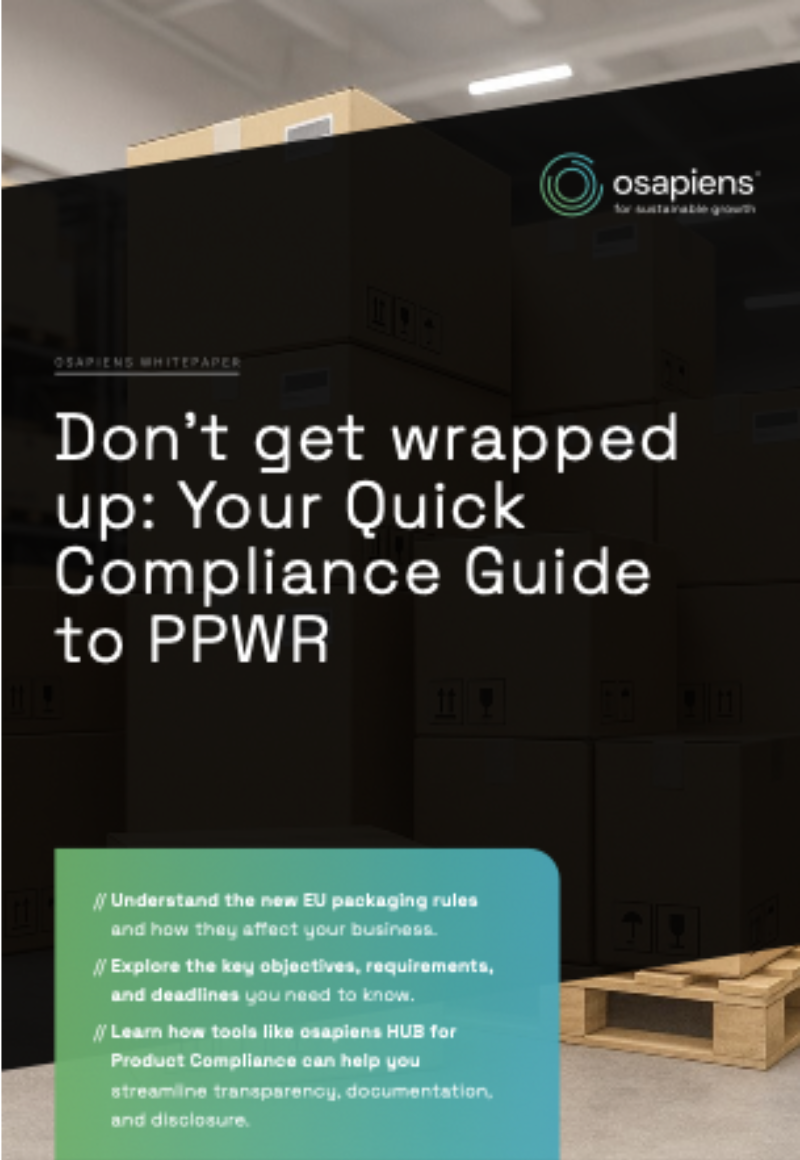
Don't get Wrapped Up: Your Quick Compliance Guide to PPWR
Preparing for PPWR compliance requires more than the right tools. Companies also need a clear understanding of the regulation, its objectives, and the obligations it introduces for packaging placed on the EU market. PPWR introduces new expectations around packaging design, recyclability, recycled content, minimization, and reusability, while requiring companies to maintain technical documentation and EU Declarations of Conformity based on verified supply chain data.
Our PPWR guide, created by osapiens experts, explains how these requirements affect your business and how to prepare.
In this guide, you will learn:
- Why PPWR matters now and how it impacts packaging design, sourcing, and compliance
- How the EU framework and its objectives affect companies across industries
- Key timelines and obligations for organizations placing packaging on the EU market
Get Your Guide
What's Inside:
Join our global network
Trusted by 2,500+ companies worldwide to streamline compliance & sustainability at scale
Healthcare










Retail














Food & Beverage

















Electronics






Chemicals






















Automotive

















Future-proof your packaging compliance with the osapiens HUB for Product Compliance & Transparency
Automate PPWR compliance, reduce risk, stay audit-ready, and gain full visibility by centralizing data and simplifying processes across your supply chain
Trusted by thousands of companies from all industries




Resource Center
Further Insights

Blog
Read time: 5 minutes
PPWR and PFAS: What Companies Must Know Now
Under the PPWR, PFAS are especially relevant for food-contact packaging. While not banned outright, companies must provide much greater transparency about the chemicals used in their packaging.
Learn more

Blog
Read time: 5 minutes
PPWR: Recyclability, Minimization, and Labeling by 2030
Under the PPWR, all packaging on the EU market must meet strict recyclability and labeling requirements by 2030. Companies that delay preparation risk costly redesigns and supplier bottlenecks later on.
Learn more
PPWR: Frequently Asked Questions (FAQ)
All your product compliance needs in one connected platform

PFAS
Map thousands of “forever chemicals” usage across your products. Detect risks early and stay compliant. Protect your market access.
Learn More

EUDR
End-to-end EUDR on autopilot. Collect plot-level data, assess risk, submit and share DDS. Effortless, automated and hassle-free.
Learn More

Digital Product Passport (DPP)
Integrate DPP data seamlessly into existing processes without disrupting operations, ensuring efficiency and regulatory alignment.
Learn More