Sustainability osapiens Summit 2026: Sustainability Becomes the Foundation of Resilient Enterprises  

Company News
Last edited: June 15, 2026
Read time 5 min.

This article is available in

Assigned categories

  • ESG
  • CSRD
  • Reporting
  • Supply Chain
  • osapiens HUB
  • Sustainability
  • Compliance
  • Supply Chain Transparency
  • Circular Economy
  • Due Diligence
  • Regulations Legislation
  • Healthcare
  • Technology Automation
  • Partners
  • Customers
  • Traceability
  • Efficiency
  • Maintenance
  • The Sustainability osapiens Summit 2026 brought together more than 2,000 decision-makers from business, technology, politics, and sustainability in Mannheim, Germany. 
  • Central topics included AI agents, product compliance, circular value creation, resilient supply chains, and regulation. 
  • Former German Vice-Chancellor Robert Habeck delivered a keynote on sustainable business as the basis for resilience and geopolitical security. 

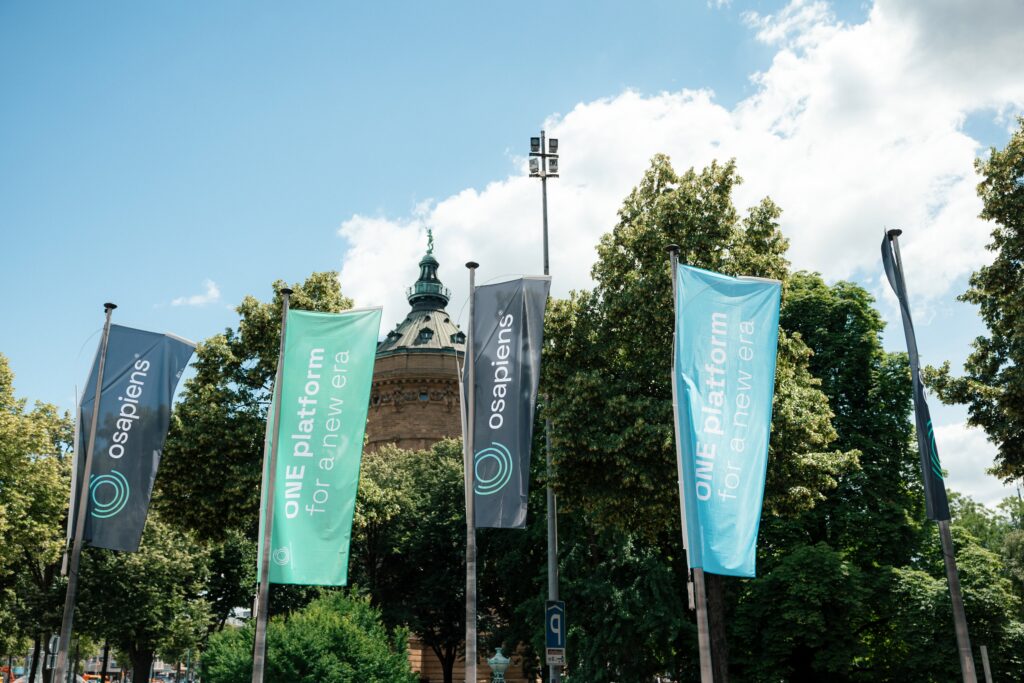
For two days, the German city of Mannheim once again became the meeting point for the future of corporate sustainability. At the Sustainability osapiens Summit (SoS.26) on June 9 and 10, more than 2,000 decision-makers from business, technology, politics, and consulting came together under the guiding theme “ONE Platform for a New Era” to discuss central questions: How do companies stay in control when supply chains grow more complex, regulation tightens, and geopolitical risk rises? And how, with the help of AI, can they become more adaptable, efficient, and resilient at the same time? 

Sustainability Becomes a Question of Resilience 

The SoS.26 made clear that sustainability can no longer be understood as an isolated task. In keynotes, panels, and masterclasses, it became evident that companies that create transparency across their products, suppliers, and risks also strengthen their competitiveness, security, and growth. With this, the summit became the stage for a new perspective: sustainability as a strategic operating system for resilient companies. 

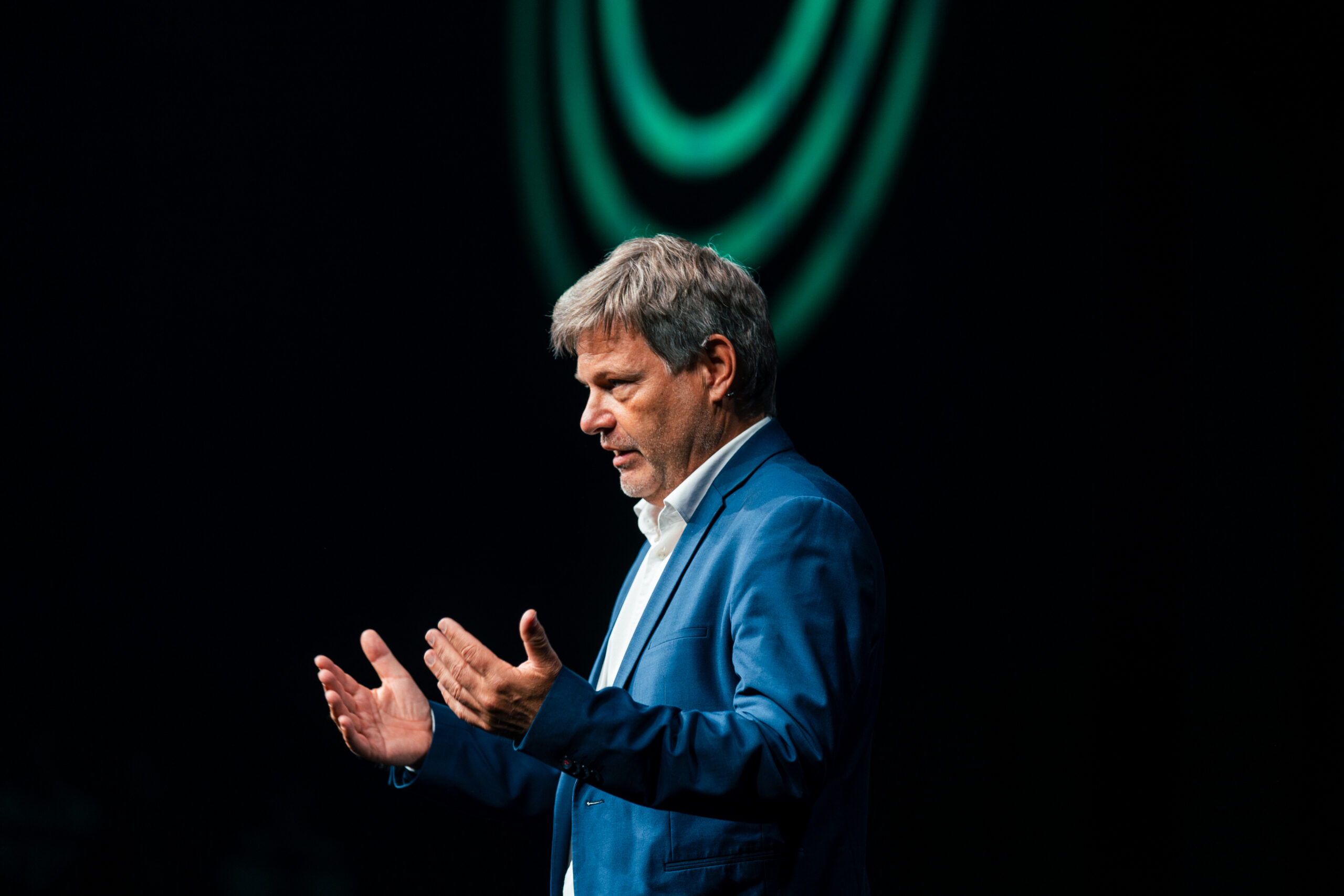
Former Federal Minister for Economic Affairs and Vice-Chancellor of Germany Robert Habeck took that argument a step further. In his keynote “Europe’s Next Chapter: Resilience and Sustainability in an Era of Global Disruption,” he framed sustainability as a matter of geopolitics: he urged Europe to use sustainable business to reduce its long-term dependence on global powers, and in doing so to strengthen its resilience and security at the political level as well. 
New Partnerships with SAP and GreenDot 

At the summit, osapiens announced a strategic partnership with SAP for last-mile distribution, the final and at the same time most complex stage of the supply chain. Through the certified integration with SAP, the osapiens HUB brings route planning, driver management, proof of delivery, and real-time tracking onto a single platform. AI analyzes traffic, location, and delivery-window data in real time, calculates optimal routes, and predicts delays. 
 
GreenDot and osapiens have entered into a strategic partnership to create the first integrated AI platform for EPR compliance under the PPWR in Europe, combining GreenDot’s deep expertise in EPR compliance, packaging licensing, and producer responsibility schemes with the osapiens HUB (full announcement here). 

More Than 150 Speakers 

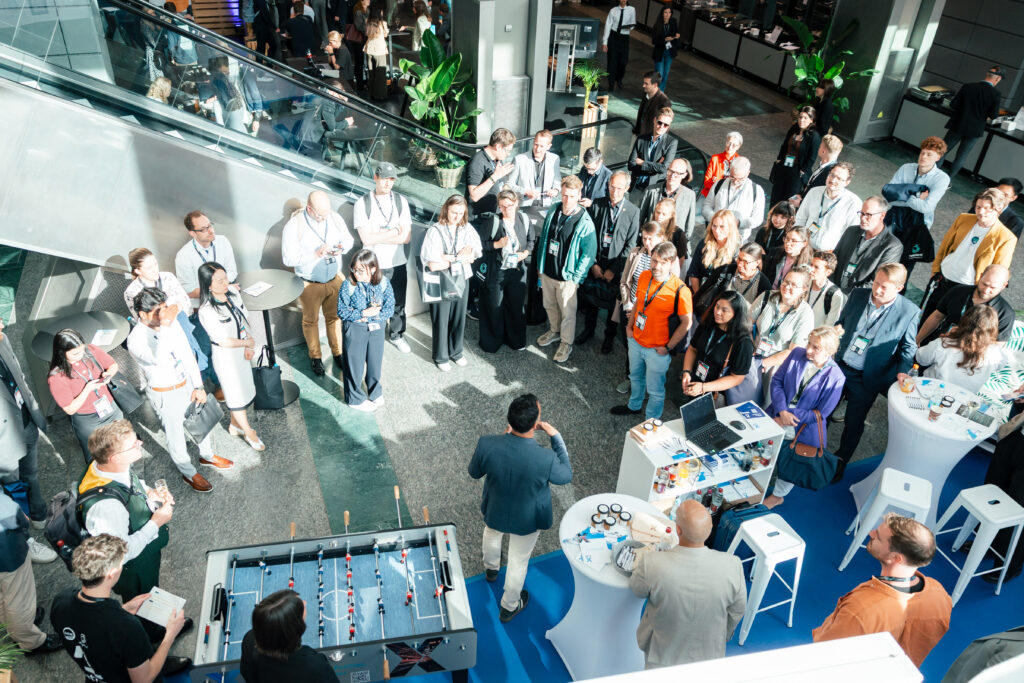
This year, too, more than 150 speakers shaped SoS.26 with presentations, panels, and hands-on deep-dive sessions. In thematic and industry-specific tracks, topics included AI agents, product compliance, reporting, supply chain resilience, carbon management, and traceability. In addition, there were sessions for industries ranging from healthcare and retail to utilities and automotive. The event was held under the patronage of the United Nations Industrial Development Organization (UNIDO). 

On stage were leading decision-makers from business, politics, and industry. Thomas Saueressig, Chief Customer Officer and member of the Executive Board of SAP, spoke about the potential of AI in last-mile distribution and the collaboration with osapiens in this area. Henna Virkkunen, Executive Vice-President of the EU Commission, focused on Europe’s competitiveness in a video message. Marco Baren (Philips), Dr. Thomas Schulte (Bosch), Pradeep Dalal (Coca-Cola North America), Carla de Luca (Iveco), and Juliana Duarte (Nordex) showed how transparency and AI-powered management pay off in daily operations. Partners such as KPMG, GS1 Germany, GreenDot, and UNIDO also spoke, as did the investor Decarbonization Partners, the joint venture of BlackRock and Temasek. 
AI Agents as the Next Development Step 

AI is an essential component of the osapiens HUB. At the summit, the company showed how it is building on that advantage: the platform today has more than 25 specialized AI agents, including solutions for supply chain monitoring, risk assessment, evidence documentation, and product compliance. The development is also reflected in the figures: over the past twelve months, more than 19 million suppliers were screened and there were 212 product updates. 

“Companies today must understand where their products come from, what risks lie in their supply chains, and how they can meet regulatory requirements efficiently. With the help of AI, this knowledge becomes a real competitive advantage for the first time. This is exactly where the osapiens HUB comes in: it forms an intelligent control layer above existing ERP systems, enabling companies to make faster and better-informed decisions,” says Alberto Zamora, Co-Founder and Co-CEO of osapiens. 

Mannheim Continues Its History of Innovation 

Mannheim has always stood for groundbreaking innovation. The city of 330,000 in Baden-Württemberg has produced inventions that have transformed entire markets, from the bicycle to the automobile and the tractor, all the way to the ERP system through SAP. With osapiens, another company from Mannheim now joins this tradition: a platform that, as an AI-powered operating system, helps companies worldwide manage sustainable growth along their value chain. 

  • The Sustainability osapiens Summit 2026 brought together more than 2,000 decision-makers from business, technology, politics, and sustainability in Mannheim, Germany. 
  • Central topics included AI agents, product compliance, circular value creation, resilient supply chains, and regulation. 
  • Former German Vice-Chancellor Robert Habeck delivered a keynote on sustainable business as the basis for resilience and geopolitical security. 

For two days, the German city of Mannheim once again became the meeting point for the future of corporate sustainability. At the Sustainability osapiens Summit (SoS.26) on June 9 and 10, more than 2,000 decision-makers from business, technology, politics, and consulting came together under the guiding theme “ONE Platform for a New Era” to discuss central questions: How do companies stay in control when supply chains grow more complex, regulation tightens, and geopolitical risk rises? And how, with the help of AI, can they become more adaptable, efficient, and resilient at the same time? 

Sustainability Becomes a Question of Resilience 

The SoS.26 made clear that sustainability can no longer be understood as an isolated task. In keynotes, panels, and masterclasses, it became evident that companies that create transparency across their products, suppliers, and risks also strengthen their competitiveness, security, and growth. With this, the summit became the stage for a new perspective: sustainability as a strategic operating system for resilient companies. 

Former Federal Minister for Economic Affairs and Vice-Chancellor of Germany Robert Habeck took that argument a step further. In his keynote “Europe’s Next Chapter: Resilience and Sustainability in an Era of Global Disruption,” he framed sustainability as a matter of geopolitics: he urged Europe to use sustainable business to reduce its long-term dependence on global powers, and in doing so to strengthen its resilience and security at the political level as well. 

New Partnerships with SAP and GreenDot 

At the summit, osapiens announced a strategic partnership with SAP for last-mile distribution, the final and at the same time most complex stage of the supply chain. Through the certified integration with SAP, the osapiens HUB brings route planning, driver management, proof of delivery, and real-time tracking onto a single platform. AI analyzes traffic, location, and delivery-window data in real time, calculates optimal routes, and predicts delays. 
 
GreenDot and osapiens have entered into a strategic partnership to create the first integrated AI platform for EPR compliance under the PPWR in Europe, combining GreenDot’s deep expertise in EPR compliance, packaging licensing, and producer responsibility schemes with the osapiens HUB (full announcement here). 

More Than 150 Speakers 

This year, too, more than 150 speakers shaped SoS.26 with presentations, panels, and hands-on deep-dive sessions. In thematic and industry-specific tracks, topics included AI agents, product compliance, reporting, supply chain resilience, carbon management, and traceability. In addition, there were sessions for industries ranging from healthcare and retail to utilities and automotive. The event was held under the patronage of the United Nations Industrial Development Organization (UNIDO). 

On stage were leading decision-makers from business, politics, and industry. Thomas Saueressig, Chief Customer Officer and member of the Executive Board of SAP, spoke about the potential of AI in last-mile distribution and the collaboration with osapiens in this area. Henna Virkkunen, Executive Vice-President of the EU Commission, focused on Europe’s competitiveness in a video message. Marco Baren (Philips), Dr. Thomas Schulte (Bosch), Pradeep Dalal (Coca-Cola North America), Carla de Luca (Iveco), and Juliana Duarte (Nordex) showed how transparency and AI-powered management pay off in daily operations. Partners such as KPMG, GS1 Germany, GreenDot, and UNIDO also spoke, as did the investor Decarbonization Partners, the joint venture of BlackRock and Temasek. 

AI Agents as the Next Development Step 

AI is an essential component of the osapiens HUB. At the summit, the company showed how it is building on that advantage: the platform today has more than 25 specialized AI agents, including solutions for supply chain monitoring, risk assessment, evidence documentation, and product compliance. The development is also reflected in the figures: over the past twelve months, more than 19 million suppliers were screened and there were 212 product updates. 

“Companies today must understand where their products come from, what risks lie in their supply chains, and how they can meet regulatory requirements efficiently. With the help of AI, this knowledge becomes a real competitive advantage for the first time. This is exactly where the osapiens HUB comes in: it forms an intelligent control layer above existing ERP systems, enabling companies to make faster and better-informed decisions,” says Alberto Zamora, Co-Founder and Co-CEO of osapiens. 

Mannheim Continues Its History of Innovation 

Mannheim has always stood for groundbreaking innovation. The city of 330,000 in Baden-Württemberg has produced inventions that have transformed entire markets, from the bicycle to the automobile and the tractor, all the way to the ERP system through SAP. With osapiens, another company from Mannheim now joins this tradition: a platform that, as an AI-powered operating system, helps companies worldwide manage sustainable growth along their value chain. 


About osapiens

osapiens – one platform for sustainable growth
osapiens develops software that empowers companies to drive sustainable growth across their entire value chain.

The osapiens HUB, a multi-tenant hyperscaler platform designed to enable cross-company collaboration and AI-automation, combines over 25 solutions in two categories: Transparency solutions enable companies to report on financial and non-financial data, manage supply chains, mitigate risk of all kinds (including cyber-risks and trade- and geo-political risks), and ensure compliance with product, reporting and supply chain regulations. Efficiency solutions enable AI-driven supplier collaboration, maintenance, service, and distribution processes to improve operational performance and strengthen competitiveness.

osapiens supports more than 2,500 customers worldwide, from SMEs to global enterprises across industries. Headquartered in Mannheim, Germany, with offices across Europe and the United States, the company works with an international team of over 550 employees.

Christian Feuring

External Communications Manager